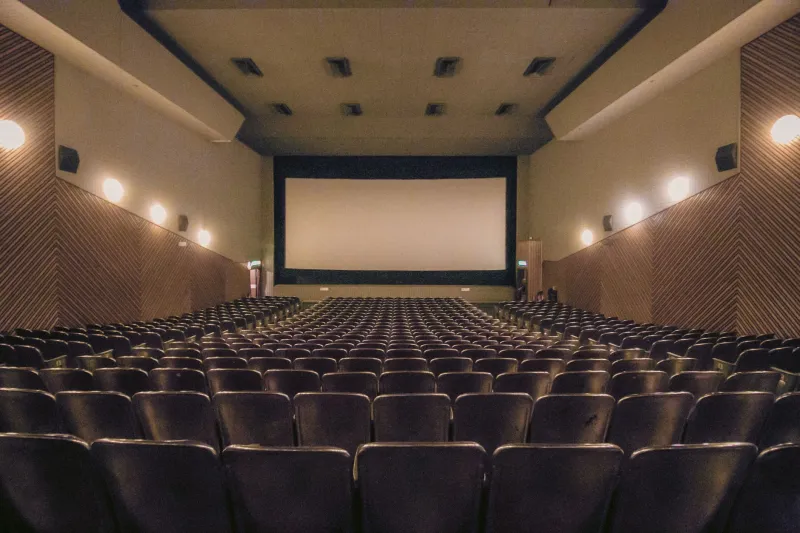
Popcorn With a Purpose: Why Independent Theaters Are Winning the Fight for the Soul of Cinema
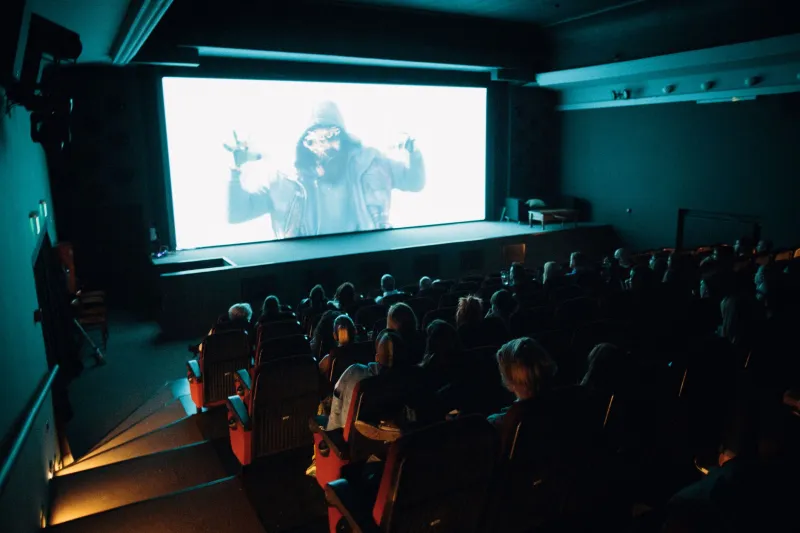
There's a particular kind of magic that happens when you walk into a theater that actually cares what it's showing you. Not the kind of place where the lobby smells like synthetic butter and the walls are plastered with ten identical posters for the same cinematic universe. The kind of place where someone — a real human being with actual opinions — decided that this film deserved a screen, a crowd, and a conversation.
That experience isn't disappearing. It's just moved. And if you haven't been paying attention, you might have missed where it landed.
The Multiplex Is Losing the Plot
Let's be honest about what's been happening to the big chains. AMC, Regal, Cinemark — they've spent the better part of a decade trying to out-comfort each other with recliner seats and dine-in menus while the actual programming on their screens grew increasingly homogenous. When your entire Q3 slate is three superhero sequels, a legacy reboot, and an animated film based on a toy brand, you're not really in the cinema business anymore. You're in the event hospitality business, and streaming is eating your lunch.
Attendance numbers back this up. The post-pandemic recovery for major chains has been uneven at best and quietly catastrophic at worst. The audiences who came back? Many of them came back for the spectacle — the big IP releases, the blockbusters engineered specifically for maximum screen real estate. For everything else, they stayed home.
But here's where the story gets interesting. While the chains were hemorrhaging casual viewers to Netflix and Max, something else was quietly gaining ground.
The Indie Theater Renaissance Nobody Predicted
Across the country, independent and arthouse theaters have been doing something the big chains forgot how to do: they've been making choices. Deliberate, opinionated, sometimes polarizing choices about what deserves a theatrical run.
Places like the Alamo Drafthouse (yes, it had its own financial turbulence, but its cultural DNA survives in its surviving locations), the Coolidge Corner Theatre in Boston, the Landmark chain, the Music Box in Chicago, the Nitehawk Cinema in Brooklyn — these venues operate with a philosophy that's closer to a curated gallery than a content warehouse. They're not just showing films. They're making arguments about which films matter.
And audiences are responding. Membership programs at independent theaters have seen notable growth in recent years. The Alamo's Season Pass program, the Coolidge's membership model, MUBI's partnership screenings — these aren't just loyalty schemes. They're community-building exercises, and they're working because they treat moviegoers as participants in a culture rather than consumers of a product.
Curation as the New Competitive Advantage
Here's the thing about living in 2025: we are drowning in content. Every streaming service has thousands of titles. Every algorithm is constantly nudging you toward something based on what you watched last Tuesday. The sheer volume of available film and television has paradoxically made it harder, not easier, to find something genuinely worth your time.
Independent theaters have figured out that curation — real, human, taste-driven curation — is now a premium offering. When the Music Box announces a weekend retrospective of a filmmaker whose work you've never encountered, they're not just programming a schedule. They're acting as a guide through a landscape that most viewers find overwhelming.
This is a fundamentally different value proposition than anything a streaming platform can offer. An algorithm can tell you that because you watched Parasite, you might enjoy a certain Korean thriller. A good independent theater programmer can build you a double feature that makes you understand why Bong Joon-ho made the choices he did — and then sell you a glass of wine while you think about it.
The Theater as Cultural Institution
Some of the most forward-thinking independent theaters have stopped thinking of themselves as theaters at all, at least in the traditional sense. They're positioning themselves as cultural institutions — closer to a museum or a live music venue than a multiplex.
Screenings come with filmmaker Q&As, pre-show lectures, curated print programs, and community events built around the films. The Metrograph in New York has a bookshop and a restaurant. The Roxie in San Francisco is a nonprofit. The IFC Center in Manhattan programs with the kind of intentionality that makes every visit feel like a statement about what cinema can be.
This institutional identity matters because it changes the relationship between the theater and its audience. You're not just buying a ticket. You're buying into a shared set of values about what film is for and why it matters. That's a much stickier proposition than comfortable seats and a loyalty rewards card.
What This Tells Us About Audiences
The success of independent theaters — and it is a genuine success story, even if it doesn't make headlines the way box office records do — reveals something important about what a meaningful segment of the audience actually wants.
They want to be challenged. They want programming that doesn't feel like it was approved by a committee of risk-averse executives. They want to see films that aren't available on any streaming platform, or that deserve to be experienced in a room full of strangers rather than alone on a laptop. They want the theatrical experience to feel like it means something.
This is an audience that studios have largely abandoned in their sprint toward IP-driven tentpoles. And independent theaters are quietly, steadily, picking up the slack.
The Road Ahead
None of this means independent theaters are immune to financial pressure. Real estate costs, licensing fees, and the ongoing fragmentation of the audience all create genuine challenges. The model requires constant reinvention and a willingness to take programming risks that a chain would never greenlight.
But the theaters that are thriving aren't doing it by accident. They're doing it by understanding something that the big chains lost sight of: a movie theater is not just a building with screens in it. At its best, it's a place where a community gathers to argue about what's worth seeing, what's worth saying, and what kind of stories we want told about us.
In an era when every piece of content is competing for a few seconds of your attention before you swipe to the next thing, that kind of intentionality is genuinely radical. The independent theater isn't just surviving the streaming age. It's making the case that some things still need to be experienced unfiltered, uncut, and in the dark with strangers.
That's not a niche. That's a lifeline.