Algorithms Don't Do Weird: How the Streaming Era Accidentally Killed the Cult Film
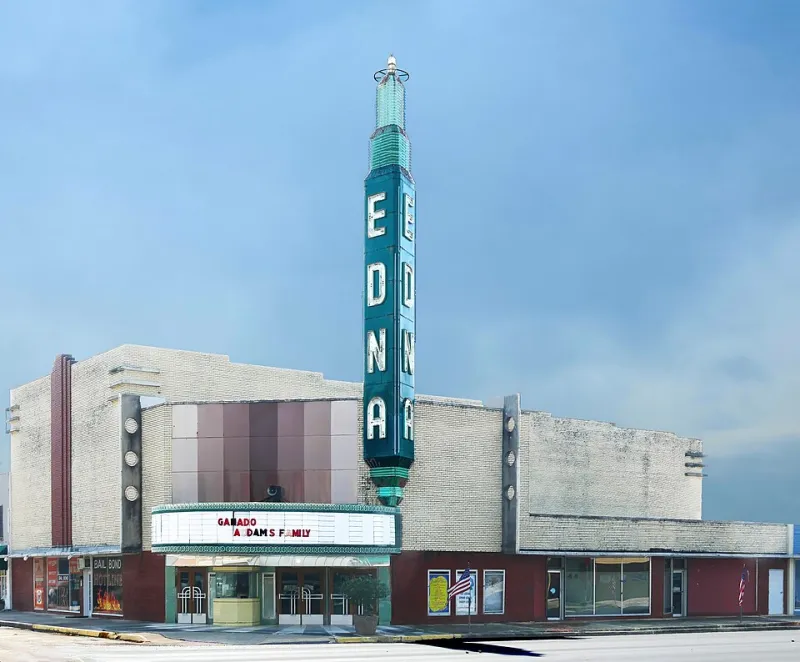
Photo: Jim Evans, CC BY-SA 4.0, via Wikimedia Commons
Algorithms Don't Do Weird: What the Streaming Era Actually Destroyed
There's a specific memory that a certain kind of film person carries around like a talisman. It involves a theater they probably shouldn't have been in, a movie they'd only half-heard about, and an audience that was — somehow, improbably — exactly the right crowd to watch it with. The film was strange. The crowd was stranger. And by the time the lights came up, something had happened that was genuinely hard to explain to people who weren't there.
That experience has a name. We used to call it cult cinema. And it's gone — not because the films stopped being made, but because the ecosystem that gave them meaning got dismantled piece by piece, and replaced with something that looks superficially similar but functions completely differently.
What Cult Actually Meant
The word gets thrown around loosely now, applied to anything with a devoted fanbase or an ironic following. But cult cinema in its original sense described something more specific: films that existed outside the mainstream distribution system, that found their audiences through friction rather than promotion, and that created communities precisely because those communities had to work to find each other.
The Rocky Horror Picture Show didn't become a cultural institution because a streaming algorithm surfaced it to people who liked musical theater. It became what it became because people showed up to the same midnight screening for years, learned the callbacks, brought the props, and participated in a living ritual that was different every time. The film was almost incidental to the experience. What mattered was the room.
The same logic applied to the underground horror screenings of the 1970s and 80s, to the VHS tape chains where someone dubbed a copy of something they'd found and passed it to five friends who passed it to five more, to the revival house circuit where a film could spend a decade building a reputation purely through reputation. The scarcity was the point. The difficulty of access was what made finding it feel like something.
The Friction Was the Feature
This is the part that gets lost in conversations about streaming democratizing access to film. The argument goes that more availability is always better — that a film that was previously impossible to find is now one search away, which should be a pure win for cult cinema.
But availability was never the problem cult cinema was solving. Scarcity was the engine that drove the culture. When a film was hard to find, finding it meant something. It meant you'd sought it out, that someone had told you about it, that you were part of a community of people who cared enough to track it down. That effort created investment. It created the sense that you'd discovered something, rather than been served something.
Streaming doesn't create discovery. It creates recommendation. Those feel similar but they're structurally opposite. Discovery involves agency, effort, and the possibility of failure — you might look and not find what you were looking for, and that near-miss is part of what makes the eventual find feel significant. Recommendation involves a system that knows your watch history and surfaces something it calculates you'll like. There's no friction, no community, no sense that you've found your people. There's just the next thing in the queue.
The Personalization Trap
Algorithms are built around the individual user. That's their entire design premise — learn what this specific person likes, and show them more of it. For maximizing engagement and minimizing churn, it works reasonably well. For building the kind of shared cultural experience that cult cinema required, it's catastrophically wrong.
Cult communities weren't built on individual taste matching. They were built on collective exposure to things that were strange, challenging, or confrontational — things that a significant portion of the audience might not have chosen on their own, but encountered because they showed up to the same place as everyone else. The shared strangeness was what bonded people. You can't algorithmically curate that, because the algorithm is specifically designed to eliminate the strangeness that didn't test well with your demographic.
A platform that recommends you Eraserhead because you watched Twin Peaks has technically surfaced a cult film. But it's surfaced it to you, alone, on your couch, stripped of every contextual element that made it mean what it meant to the people who found it in a 200-seat theater in 1977 with an audience who had no idea what they were in for. The film is the same. The experience is unrecognizable.
Fragmentation Finished What Algorithms Started
If personalization isolated viewers from each other, fragmentation across dozens of competing platforms finished the job. The shared cultural vocabulary that used to exist around underground and independent film required people to be watching from the same pool. When the conversation about a film could happen because everyone who cared about it had access to the same VHS copy, or showed up to the same repertory screening, there was a commons. A place where the discourse could happen.
Now, a film might be on one platform in some regions, unavailable in others, pulled after eighteen months when a licensing deal expires, and accessible to a subset of subscribers who happened to see it in the algorithm's recommendation window before it got buried. The conversation fragments before it can cohere. The community never forms because the community can never all be watching at the same time.
The films that might have become cult classics in a different era — the weird, the challenging, the genuinely unclassifiable — get watched in isolation and forgotten. Not because audiences don't want them, but because the infrastructure for turning individual viewings into collective experience no longer exists.
Something Is Trying to Fill the Gap
It would be unfair to say nothing has survived. The Alamo Drafthouse model, genre-specific festivals, and a handful of repertory theaters in major cities are doing something genuinely valuable — maintaining physical spaces where the communal experience of strange cinema can still happen. Online communities built around specific subgenres have recreated something of the word-of-mouth chain that used to drive cult discovery.
But these are small fires in a much colder landscape. They serve the already-converted, the people who already know they're looking for something weird and have gone out of their way to find the community. The accidental discovery — the person who wandered into a midnight screening not quite knowing what they were getting into and came out changed — that's the part that's genuinely hard to replicate.
Cult cinema needed people who didn't know they needed it yet. The algorithm only talks to people it already has a profile on.