Whose Movie Is It Anyway? The Quiet War Over Who Gets the Last Edit
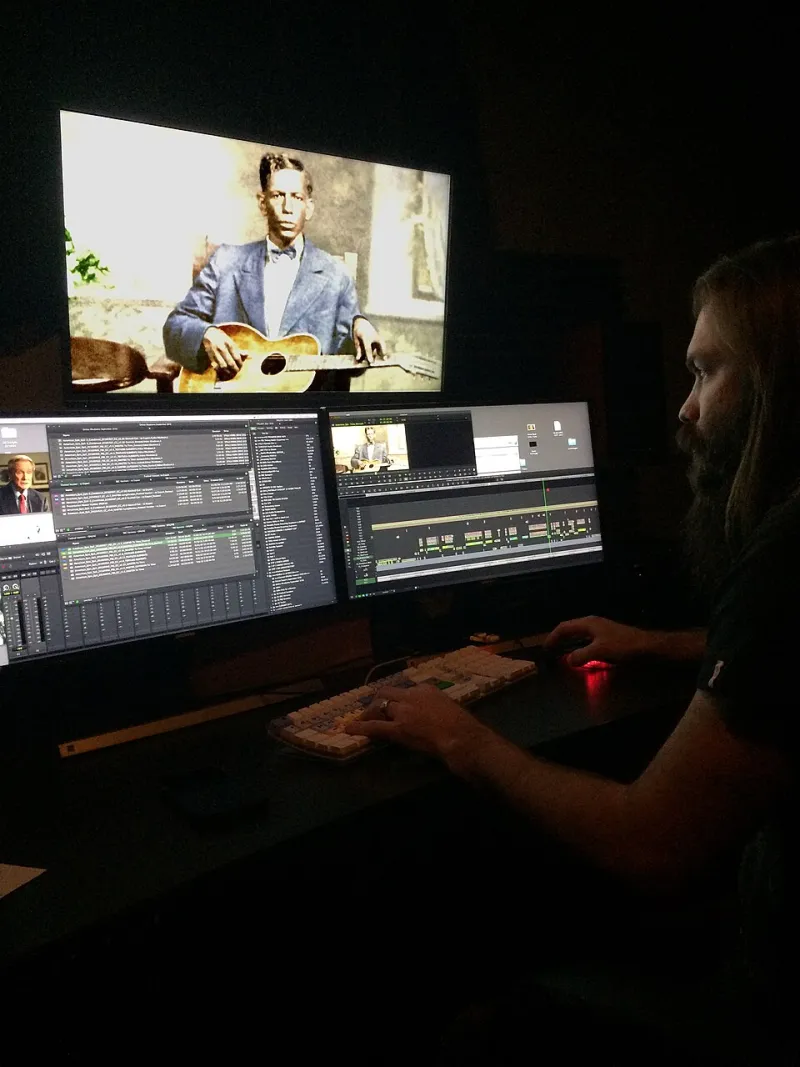
Photo: Pen vs Sword, CC BY-SA 4.0, via Wikimedia Commons
There's a version of nearly every major film you haven't seen. It lives on a hard drive somewhere, possibly in a climate-controlled server room, possibly on a filmmaker's personal backup. It has scenes the studio found too slow, too strange, or too expensive to defend in a marketing meeting. It has the ending the director actually wanted. And in a lot of cases, you're never going to see it.
The director's cut — once a celebrated artifact of cinematic culture — is quietly becoming a relic. Not because filmmakers have stopped caring about their work, but because the systems controlling distribution have made releasing the unfiltered version more trouble than it's worth.
The Myth of Creative Partnership
Hollywood has always sold itself as a creative town. Directors are celebrated at award shows, profiled in glossy magazines, and asked thoughtful questions about their artistic process on press tours. But the relationship between a filmmaker and the studio funding their work has never been a partnership of equals. Money talks, and the people holding the money have always reserved the right to talk back — loudly, and usually in the editing room.
What's changed in recent years isn't the existence of studio interference. It's the erasure of the correction mechanism that used to exist afterward. For decades, the director's cut served as a kind of cultural footnote — a way for audiences to eventually access what the filmmaker actually intended. Ridley Scott got his with Blade Runner. Francis Ford Coppola has spent decades reassembling Apocalypse Now. Even smaller films found their way to home video with extended cuts, deleted scenes, and the director's commentary explaining what got left on the floor.
That correction mechanism is breaking down.
Streaming Didn't Save the Director's Cut — It Buried It
When streaming platforms started swallowing the entertainment industry whole, a lot of film lovers assumed it would be a golden age for deep catalog access. More space, no physical shelf limits, no distribution bottlenecks. Surely that meant more director's cuts, more extended versions, more context.
Instead, the opposite happened.
Streaming platforms are optimized for engagement metrics, not archival completeness. A director's cut that runs forty minutes longer than the theatrical version is, from an algorithm's perspective, a liability. It has a lower completion rate. It pulls viewers away from the next autoplay recommendation. It doesn't fit neatly into a genre category. The platform's incentive structure actively punishes the kind of patient, complex filmmaking that tends to define a director's intended vision.
Several indie directors have spoken candidly about this wall. One filmmaker — who asked not to be named because they're still navigating a distribution deal — described pitching their extended cut to a streamer as "trying to explain to a spreadsheet why poetry matters." The platform passed. The theatrical version, eighteen minutes shorter and missing a subplot the director considered essential, went up instead.
High-Profile Cases Where the Cut Never Came
The frustration isn't limited to independent filmmakers grinding through the festival circuit. Big-budget productions have their own version of this problem, and the stakes are proportionally higher.
Zack Snyder's situation with the Justice League became the most publicly documented battle over a director's cut in modern film history — and the fact that the Snyder Cut eventually got released says less about the system working than it does about an unusually loud fan campaign forcing an exception to the rule. For every Snyder Cut that makes it out, there are dozens of films where the director's version simply doesn't have that kind of organized advocacy behind it.
Consider the quieter cases: films that came and went without fanfare, where the theatrical version felt truncated or oddly paced, and where the director later mentioned in interviews that significant material had been removed. The audience senses something is missing but has no way to confirm it. The studio has no financial incentive to release an alternate version that might implicitly criticize the version they already marketed. The filmmaker, bound by contract and professional relationships they need to protect, says as much as they can without burning bridges.
The cut stays locked.
The Contract Problem Nobody Wants to Talk About
Final cut is a contractual right, and most directors — even experienced ones — don't have it. The Directors Guild of America has provisions around creative rights, but final cut authority is typically reserved for filmmakers with significant leverage: the Spielbergs, the Nolans, the Andersons who have earned the right to deliver a film without studio override.
For everyone else, the contract often includes language that gives the studio broad authority over the final version. What it rarely includes is a clear path for the director to release their own cut later. That requires a separate negotiation, a separate budget for any additional work, and a studio that sees value in doing it. In the current landscape, where streamers are cutting costs and theatrical windows are shrinking, that value is increasingly hard to make the case for.
Independent producers describe this as a structural problem, not an individual one. "It's not that any single executive wakes up wanting to suppress a filmmaker's vision," one veteran producer told us. "It's that the incentive structure never rewards releasing the director's cut, and it sometimes punishes it. So it just doesn't happen."
What Gets Lost When the Director Doesn't Have the Last Word
This matters beyond the abstract principle of artistic integrity. Films are cultural documents. They reflect the specific vision of the person who made them, and that vision often contains things that feel uncomfortable or uncommercial precisely because they're honest. The scenes that get cut are frequently the ones that slow down the pace to let something breathe — a character moment, a tonal shift, an ambiguous ending that refuses to resolve cleanly.
Those are also the elements that tend to make films last. The movies that hold up over decades are rarely the ones that were perfectly engineered for a Friday opening weekend. They're the ones that felt a little strange, a little unresolved, a little too committed to their own logic to care about mass appeal.
When studios control the final edit indefinitely, and when the systems distributing films have no mechanism for revisiting the director's version, that longevity gets cut off at the source. We're left with the approved version — the one that tested well, that marketing could work with, that nobody had to defend in a difficult meeting.
Somewhere on a hard drive, the real movie is still waiting.